
[box] At a glance - On 2 September 2026 Uber shut its ride-hailing operations in Nigeria after 12 years, also exiting Uganda, citing only a "thorough review" of the business. No driver or rider numbers were disclosed. - The exit is not evidence of weak demand. The African ride-hailing market is still estimated to grow to about $2.64bn in 2026 from $2.53bn in 2025. - The real signal is that in Nigeria, enormous consumer demand no longer guarantees workable platform economics. - For fintech, the risk is not lost rides but lost digital payment habit if displaced riders drift back to cash. - Our verdict: WATCH, not panic. The next 12 months should be measured, not narrated.
Nigeria did not wake up on 2 September 2026 without Uber. It woke up without one of the companies that helped define what digital commerce, app-based mobility and cashless consumer behaviour could look like here.
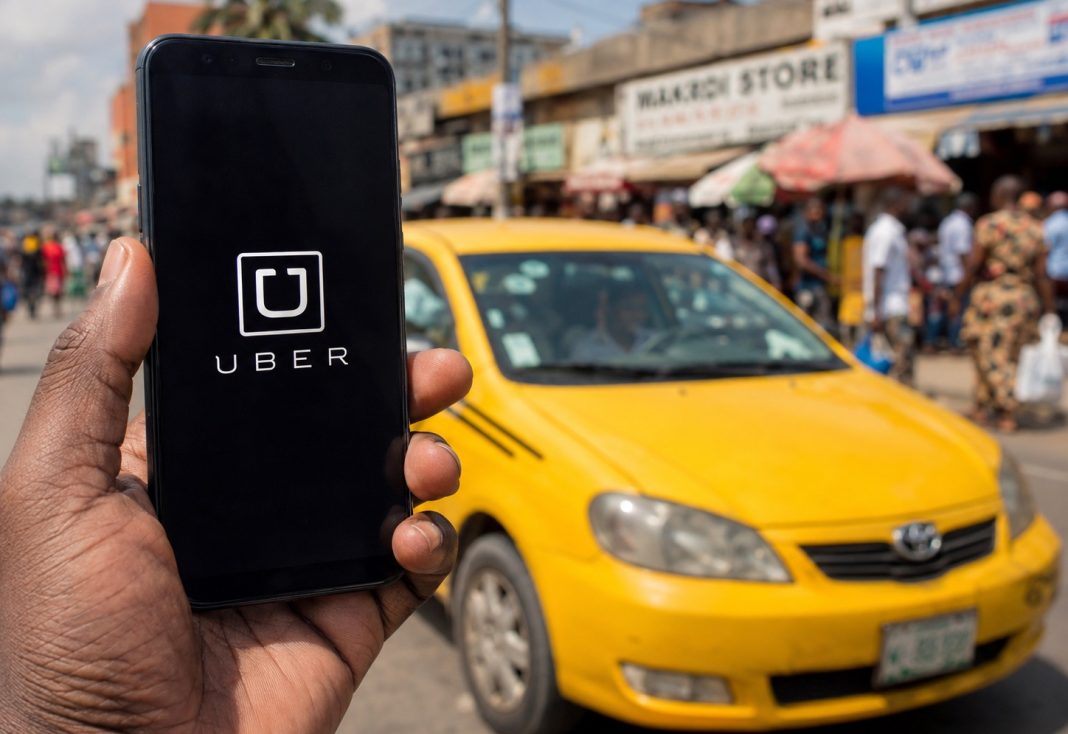
After 12 years, Uber has shut down its Nigerian ride-hailing operations. It exited Uganda at the same time and said only that the decision followed a "thorough review" of the business. It did not disclose how many drivers or riders were affected, nor the economics behind the call.
That distinction matters. The easy story is: Uber left, Bolt wins, drivers lose. The more important story is that Nigeria's ride-hailing market has reached the point where massive consumer demand does not automatically translate into attractive platform economics. That is a far bigger story for Nigeria's fintech and digital economy.
## Uber did not leave because Nigeria lacks demand
This is the first misconception to eliminate. Nigeria has no shortage of people who need mobility. Smartphones, digital payments and demand for app-based transport continue to support growth across the continent, with one 2026 industry estimate placing the African ride-hailing market at roughly $2.64 billion, up from $2.53 billion in 2025.
So the exit cannot be read as "Nigerians don't use ride-hailing." They do. The problem is that market demand and platform profitability are two different things.
A ride-hailing platform must simultaneously manage:
- Fuel costs and driver earnings - Vehicle depreciation and financing - Insurance and safety obligations - Customer acquisition, discounts and incentives - Payment processing costs and technology - Local operating costs, FX exposure and regulatory requirements
When these costs rise faster than fares, a platform can keep growing while its economics deteriorate. That is the real warning.
## A ₦10,000 ride is not a ₦10,000 business
The fare has to support an entire chain: passenger fare, then platform commission, then driver income, then fuel, then maintenance, then vehicle financing and depreciation, then insurance and operating expenses, then platform infrastructure.
> The driver is not simply competing with another driver. The driver is absorbing part of Nigeria's macroeconomic shock.
Fuel prices have risen sharply since subsidy removal. Inflation has raised the cost of maintaining a vehicle and of living. Currency depreciation has raised the cost of imported vehicles, spare parts and technology inputs. Meanwhile riders remain highly price sensitive.
That creates a squeeze from both sides. Drivers want higher fares. Riders want lower fares. Platforms want sustainable margins. That triangle is becoming harder to balance — and Nigerian drivers were already signalling strain before the exit. In March 2026, drivers across Uber, Bolt, inDrive and LagRide were reported to have planned industrial action over deteriorating conditions and falling earnings.
Uber's exit did not create the problem. It arrived at the end of a problem that was already visible.
## The most important number is not ₦34 billion
The widely shared claim that Uber contributed roughly ₦34 billion a year to Nigeria's economy is attention-grabbing. But without a transparent methodology or authoritative source behind it, we will not publish it as fact. This is exactly where an analytical publication should separate itself from social media commentary.
What we can say confidently is that the departure removes economic activity from a network of drivers, fuel stations, mechanics, vehicle dealers, insurers, payment providers, telcos, mapping and technology providers, and the businesses that depend on urban footfall. The impact is multiplicative rather than linear: one ride does not create value for the platform alone, it creates a chain of transactions.
So the better question is not "how much did Uber contribute?" but "how much economic activity was connected to the Uber ecosystem, and how much of it migrates to competing platforms?"
## What we can actually verify
| Data point | Figure | Source / period | | --- | --- | --- | | African ride-hailing market | ~$2.64bn (2026) vs $2.53bn (2025) | Industry estimate, 2026 | | Nigerian travel-app downloads | Bolt already ahead of Uber | Sensor Tower, reported 2025 | | inDrive net revenue | $601.6m, up 31% | Reuters, 2025 | | Local challenger apps attempted | 2,500+ | Drivers' union via TechCabal, 2025 | | Uber global restructuring | ~3,300 corporate roles cut | Company restructuring | | Uber autonomous-vehicle commitment | $10bn+ | Company strategy disclosures | | Nigerian driver industrial action | Planned across four platforms | March 2026 reports |
## The biggest winner may not be Bolt
The immediate assumption is that Bolt wins, and there is reason for it: Bolt had already overtaken Uber in Nigerian travel-app downloads, according to Sensor Tower data reported in 2025.
But an exit does not create a monopoly. It creates an opportunity for whoever can absorb Uber's displaced demand without inheriting Uber's cost problem. Bolt will likely capture riders, drivers, trips, corporate accounts and brand loyalty. inDrive, however, runs a different model: fare negotiation between rider and driver rather than purely algorithmic pricing. Reuters reported inDrive's net revenue rose 31% in 2025 to $601.6 million as it kept expanding. In a price-sensitive market, that model travels well.
> The contest is no longer Uber versus Bolt. It is which platform can hold the healthiest three-way balance between rider price, driver income and platform margin.
## Nigeria may get a winner without getting a healthier market
Suppose Bolt gains riders, inDrive gains drivers and local platforms gain share. That sounds positive. But if the underlying economics remain broken, market share does not fix them. A platform can have more riders, more drivers and more transactions and still struggle to produce attractive economics.
That is the difference between growth and quality of growth. The next generation of Nigerian fintech and mobility companies should not only ask how fast they can acquire customers, but whether the economics of serving those customers can survive Nigeria's macro environment.
## Why this is a fintech story, not just a mobility one
Ride-hailing is a high-frequency digital-commerce use case. Every trip can generate a digital payment, a card transaction, wallet activity, processing fees, identity and location data, a digital receipt and — most valuable of all — repeat behaviour.
Remove a major platform and that activity mostly migrates rather than disappears. An Uber transaction becomes a Bolt transaction, or an inDrive transaction. The scenario that should worry fintech is the third one: a digital transaction becoming a cash transaction.
## The real fintech risk: digital reversal
Nigeria has spent years moving consumers from cash toward digital. Ride-hailing helped normalise entering card details into an app, using stored credentials, receiving digital receipts, trusting automated payments and travelling without physical cash.
If competing platforms deliver an equally strong payment experience, the exit will barely dent the cashless transition. But if riders start meeting payment failures, limited card acceptance, poor refunds, cash negotiations and inconsistent receipts, the market could see a small but meaningful reversal. Payment experience should be treated as part of mobility infrastructure, not a feature bolted onto it.
## Nigeria's FX problem is becoming a technology problem
Currency volatility does not only hit importers and manufacturers. A multinational operating locally earns in naira while carrying costs — infrastructure, software, equipment, vehicles, spare parts, capital allocation — that can be exposed to foreign currency. Consumers and drivers earn almost entirely in naira. That structural mismatch makes Nigeria attractive when growth is high and difficult when local operating costs outrun monetisation.
## The driver is now the most important unit of analysis
Discussion has focused on riders for years, but sustainability depends more on drivers, because without drivers there is no supply. And drivers have become sophisticated economic actors who compare Uber, Bolt, inDrive, local platforms, offline trips and private clients — and multi-home across all of them.
A driver moves to wherever fare × trip frequency, minus fuel, maintenance and commission, produces the best return. The real competition is increasingly for driver hours, not merely customers.
If drivers previously leaned heavily on Uber, the rational response is not to move exclusively to Bolt — it is to run several apps at once, monitor demand, negotiate private customers and optimise around location and fuel cost. Supply becomes more fragmented, and platforms end up competing on driver economics.
## The monopoly argument needs caution
It is tempting to say Bolt now has a monopoly. We would not use that word. The exit unquestionably strengthens Bolt, but dominance is not monopoly: inDrive and local operators remain, and Nigeria has a long history of new entrants trying. TechCabal reported in 2025 that a drivers' union estimated more than 2,500 Nigerian ride-hailing apps had attempted to compete with Uber and Bolt — an illustration of how brutal this market is for challengers.
The useful question is whether another platform can reach sufficient liquidity to challenge Bolt. That needs drivers, riders, trust, payments, pricing, safety and capital simultaneously. That is the network-effect wall, and it is why building an app is the easy part.
## Uber's global strategy also matters
Uber itself is changing. The company is in a major strategic transition toward autonomous vehicles and robotaxis, with more than $10 billion committed to that strategy, and is cutting roughly 3,300 corporate roles globally as part of a restructuring.
So the Nigerian exit should not be read purely as a verdict on Nigeria. It may equally be a capital-allocation decision about where Uber deploys money, technology and management attention for the next decade. That is a more sophisticated reading than "Nigeria chased Uber away."
## But Nigeria still has to ask hard questions
- Can global technology companies earn sustainable returns here? - Is regulation predictable enough to support long-term investment? - Can platforms pass higher operating costs to consumers at all? - Are drivers earning enough to keep supply healthy? - Can digital businesses manage FX risk? - Is payment infrastructure reliable enough? - Can competition stay healthy as international players leave?
These questions reach well beyond mobility — into fintech, logistics, e-commerce, digital banking, food delivery and SaaS. Uber becomes a case study in Nigerian platform economics.
## What investors should take from this
The lesson is not "don't invest in Nigeria." It is "model Nigeria differently." A Nigerian technology model has to account for inflation-adjusted revenue, FX exposure, customer affordability, driver and vendor economics, regulatory cost, payment economics, capital requirements and operational resilience.
> A business can show impressive user growth and still have deteriorating real economics. "10 million users" is not a number. Contribution margin per active user, after the Nigerian cost structure, is.
## The five indicators to track over 12 months
| Indicator | What to measure | What it would tell us | | --- | --- | --- | | Fare inflation | Average ride price on comparable routes | Whether concentration is being priced to riders | | Driver earnings | Net income per hour after fuel and commission | Whether supply stays healthy | | Platform commissions | Take rate on completed trips | Whether platforms use reduced competition to widen margin | | Digital payment penetration | Share of trips paid by card or wallet | Whether the cashless habit holds | | Service quality | Wait times, cancellations, safety complaints | Whether competition still disciplines service
## Our 12-month hypothesis
| Horizon | Base case | | --- | --- | | Short term | Bolt takes the largest immediate share of displaced demand | | Medium term | inDrive and others compete aggressively for price-sensitive riders and drivers | | Driver economics | Bargaining power improves temporarily, then earnings pressure returns as rider competition intensifies | | Consumer prices | Peak-period pricing becomes less competitive if concentration rises | | Fintech | Most digital volume migrates to alternative platforms rather than disappearing | | Market structure | More concentrated, but not monopolistic | | Strategic implication | Winners hold liquidity while protecting driver economics and consumer affordability |
## The verdict
Uber's exit is not proof that Nigeria is impossible for global technology companies. It is something more useful: a very large data point. It tells us a market can have an enormous population, high smartphone adoption, strong consumer demand, fast-developing fintech infrastructure and huge urban mobility needs — and still be difficult to monetise sustainably.
That is the paradox of Nigeria's digital economy. The market is enormous. The opportunity is enormous. The friction is enormous too. And that friction is where the next generation of Nigerian technology companies will either build extraordinary businesses or fail.
Uber did not simply leave Nigeria. Nigeria lost a global platform at a moment when the economics of digital businesses are being tested harder than ever. But we should resist turning this into nationalism, blame or celebration. The uncomfortable lesson is that demand is not enough, users are not enough, downloads are not enough, transaction volume is not enough. A platform has to make its economics work — and in Nigeria that means surviving the intersection of inflation, fuel, FX, regulation, consumer affordability, driver economics and payment infrastructure.
[box] FintechReviewNG verdict: WATCH — not panic - Uber's departure deserves neither celebration nor hysteria. It deserves measurement. - The next 12 months will reveal whether Nigeria's ride-hailing ecosystem has lost competition — or simply redistributed it. - Track the five indicators above. That is the story worth following.