
There is a phrase from the BRICS Summit in New Delhi this weekend that deserves more attention than it received in the daily news cycle.
"A nation that owns no technology risks renting its future."
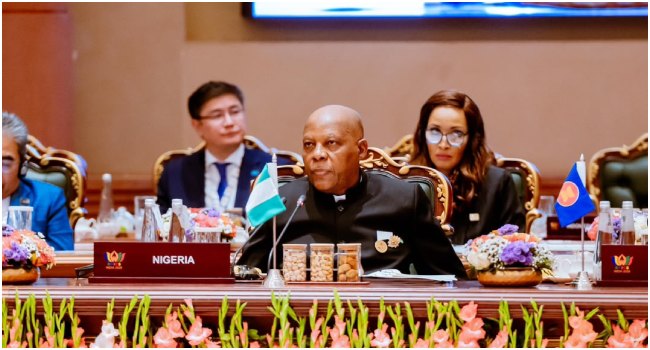
President Bola Tinubu, speaking through Vice President Kashim Shettima at the 18th BRICS Leaders' Summit, delivered that line while outlining Nigeria's case for deeper cooperation in artificial intelligence, digital public infrastructure, fintech, telecommunications, and cybersecurity .
It is a warning. But it is also a strategy. And for Nigeria's fintech ecosystem, it is a clear signal of where the government believes the next phase of growth will come from.
The Pitch: From Consumer to Producer
Tinubu's address was not just a diplomatic courtesy. It was an investment pitch framed around a specific vulnerability: developing countries have become consumers of technology built elsewhere, without owning the infrastructure, intellectual property, or knowledge that powers it .
The call for BRICS cooperation in fintech and AI is therefore not simply about attracting foreign capital. It is about shifting Nigeria's position in the global value chain from a market where technology is deployed, to a market where technology is produced, owned, and exported.
The specific areas named are telling: artificial intelligence, digital public infrastructure, fintech, telecommunications, cybersecurity, biotechnology, and advanced manufacturing .
For fintech specifically, this is a direct acknowledgment of something the industry already knows: Nigeria has the users, the transaction volume, and the talent. What it does not have at scale is the underlying infrastructure — the data centres, the AI models, the payment rails, and the cybersecurity frameworks that determine who captures the most value.
Tinubu's pitch rested on two core assets.
The market. Nigeria's population of 250 million, with an average age of 16.9, represents one of the largest and youngest consumer markets in the world . For BRICS investors looking at digital trade, fintech adoption, and AI-enabled services, Nigeria is not a niche. It is a gateway to Africa's expanding market under the African Continental Free Trade Area .
The talent. The President pointed to initiatives like 3MTT (Three Million Technical Talent), Project BRIDGE, and national AI programmes as evidence that Nigeria is building the human capital required to support technology production, not just consumption .
The 3MTT programme, in particular, is relevant to fintech. A larger pool of technically trained Nigerians means a larger pool of founders, engineers, and data analysts capable of building products that solve local problems — and potentially scale beyond Nigeria's borders.
What This Means for Nigerian Fintech
The BRICS cooperation framework, if it translates into actual partnerships, could open several doors for the fintech ecosystem.
AI infrastructure and skills transfer. Nigerian fintechs are already experimenting with AI for credit scoring, fraud detection, and customer service. Deeper cooperation with BRICS countries — several of which have advanced AI ecosystems — could accelerate access to models, compute, and training.
Digital public infrastructure. Project BRIDGE, the government's broadband and fibre expansion initiative, is explicitly named in the pitch . Fintech adoption is constrained by connectivity. If the infrastructure improves, the addressable market for digital financial services expands.
Cybersecurity frameworks. As Nigerian fintech scales, so does the attack surface. The call for BRICS cooperation in cybersecurity signals that the government sees this as a shared infrastructure challenge, not just a private-sector problem.
Fintech as a diplomatic asset. Nigeria is positioning its fintech sector as part of its international economic identity. This matters for regulatory harmonization, cross-border payments, and the credibility of Nigerian fintech seeking partnerships or listings abroad.
The Cautious Note
Cooperation frameworks are easy to announce. Implementation is harder.
The BRICS summit produced a clear statement of intent: Nigeria wants technology transfer, investment, and partnership. What it did not produce and what cannot be produced at a summit is a guarantee that capital will flow, that partnerships will materialize, or that the regulatory environment will adapt quickly enough to support them.
The President's own framing acknowledged this. He called for a BRICS partnership "that moves from dialogue to delivery, from commitments to implementation, and from cooperation to measurable development outcomes" .
For Nigerian fintech, that is the test. Not whether BRICS leaders nodded in agreement, but whether Nigerian builders get access to the AI infrastructure, capital, and markets that the summit promised.
The Bottom Line
Nigeria's fintech ecosystem does not need another summit to tell it that technology ownership matters. Founders building payment infrastructure, lending platforms, and investment products already understand that the most defensible businesses are the ones that own their rails.
What the BRICS pitch does is elevate that principle to a national strategy. If it works, Nigerian fintech moves from renting its future to building it.
If it does not, the phrase becomes a warning that was heard but not heeded.
Source Credit: Federal Ministry of Information and National Orientation, Office of the Vice President