
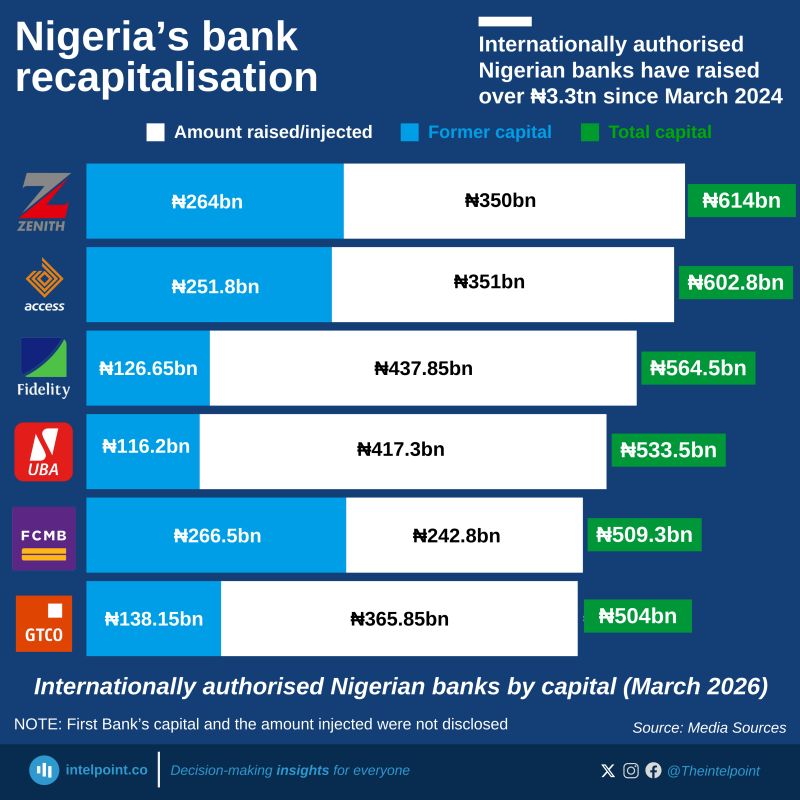
Nigeria’s banking industry has reached a major milestone with the successful completion of a ₦4.65 trillion recapitalisation exercise mandated by the Central Bank of Nigeria (CBN). This is the largest capital raise since the 2004 consolidation era and signals a renewed commitment to financial system stability, resilience, and long-term growth.
The recapitalisation became necessary due to rising economic pressures including FX volatility, inflation, and increased credit risk. Strengthening the capital base of banks ensures they can absorb shocks, comply with global Basel III standards, and support Nigeria’s broader economic recovery.
A key highlight of the recapitalisation is the participation of foreign investors, who contributed 27% of the total capital raised. This level of foreign interest reflects renewed confidence in Nigeria’s regulatory direction and the long-term prospects of its financial sector.
With stronger balance sheets, banks now have greater capacity to expand lending to SMEs, households, and corporates. This is expected to stimulate economic activity, deepen credit penetration, and support sectors that have struggled with limited access to finance.
The recapitalisation also sets the stage for increased competition between traditional banks and fintech lenders. With more capital to deploy, banks will intensify their push into digital lending, payments, and consumer credit—areas previously dominated by fintechs. This shift will likely accelerate innovation, partnerships, and regulatory scrutiny across both sectors.
For consumers, the benefits include improved banking stability, better digital services, and expanded access to credit. For the wider economy, the recapitalisation strengthens Nigeria’s financial system, enhances investor confidence, and positions the country for more sustainable growth.
As Nigeria enters a new phase of financial sector reform, the recapitalisation marks a foundational step toward building a stronger, more competitive, and more resilient banking ecosystem.